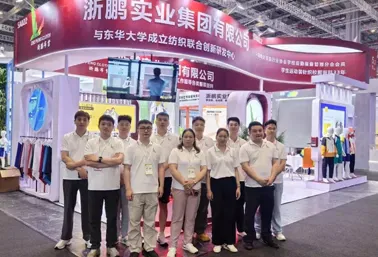
 Polyester Cotton Knit Fabric for School Uniforms
Choosing a school uniform fabric involves more than checking its polyester-to-cotton ratio. Buyers also need to understand the face and back, match the fabric to the garment, and confirm its performance under the intended care conditions. Using a 52% polyester, 48% cotton fabric as an example, this guide explains what to check before sampling and how to discuss a suitable specification with Zhepeng.
Understand the Face and Back
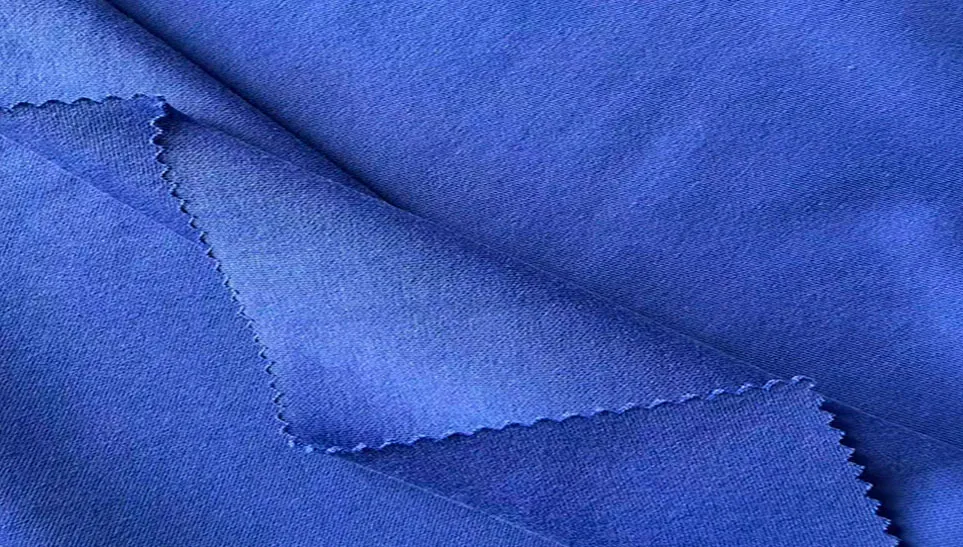
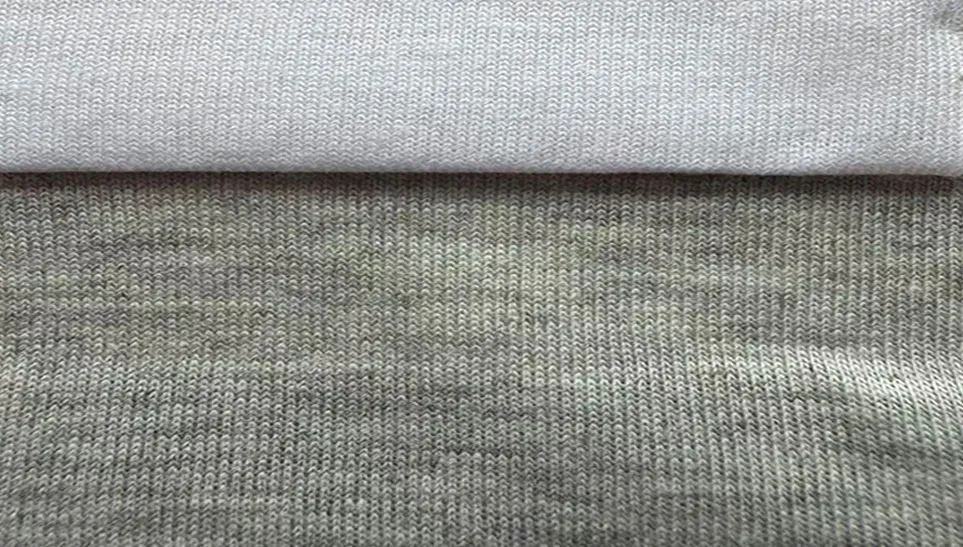
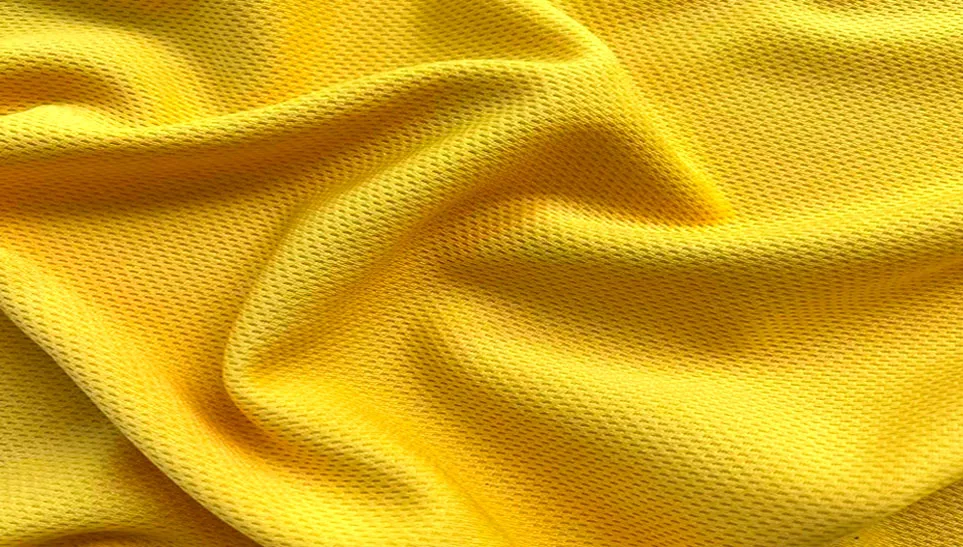
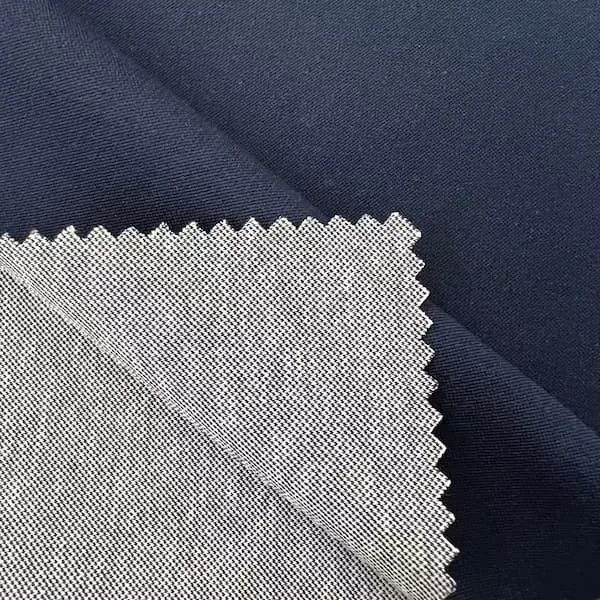
The 52/48 ratio describes the overall fiber content. It does not show which fibers are exposed on each surface or which side should face the skin. Ask for a labeled sample and confirm yarn placement, stitch structure and intended garment orientation. If polyester is intended for the outer face and cotton for the back, confirm this for the specific article rather than inferring it from the blend.
Double knit describes a construction category, not a fiber arrangement. Interlock is one type of double knit; the terms are not interchangeable. A fabric with different face and back compositions is not automatically a double knit. Match the construction name to the actual sample and technical specification.
Review a Representative Fabric
A product example should connect the sample to a reproducible specification. Before evaluating the 52% polyester, 48% cotton sample, review the following details on its specification sheet. Confirm tolerances and make sure the sample, specification sheet and quotation refer to the same article.
Specification | Representative article |
Article number | 3808# |
Composition | 52% polyester, 48% cotton |
Construction | 100D/36F+32sC |
Fabric weight | 300g/m² |
Usable width | 180cm |
Face and back | Polyester face (100D/36F) / cotton back (32s). Intended garment orientation: polyester side facing outward and cotton side facing inward |
Intended garment use | Suitable for school uniforms, workwear, sportswear, polo shirts & casualwear |
Match the Fabric to the Garment
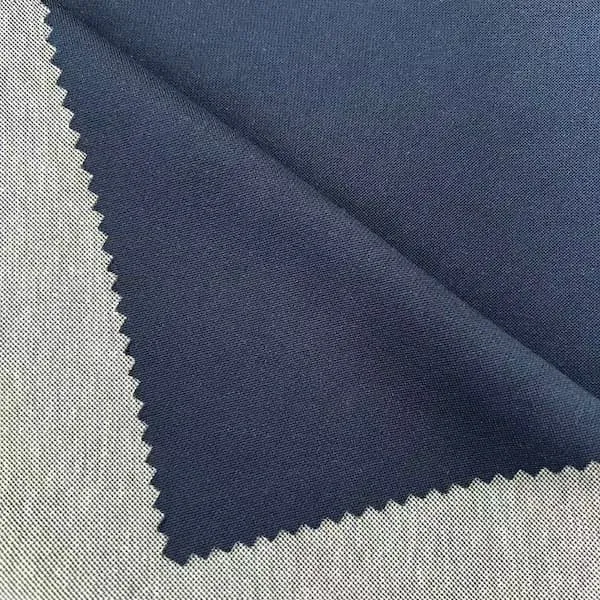
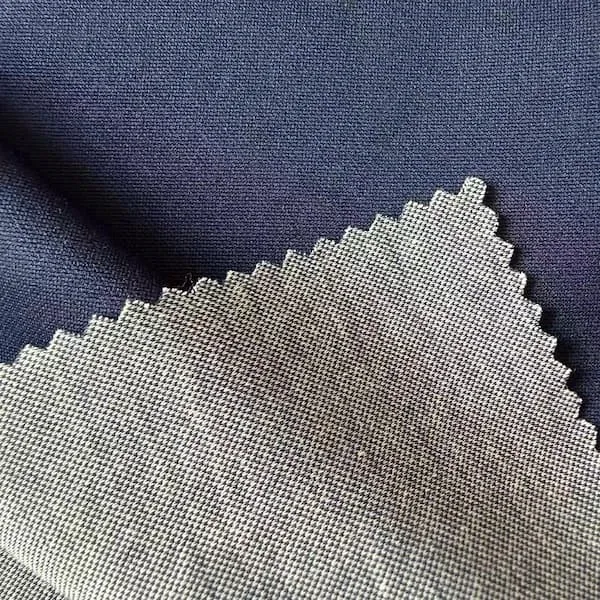
Compare both surfaces for softness, smoothness and firmness, then assess the fabric in a sample garment. For tops worn next to skin, check comfort at the collar, cuffs and seams. For PE clothing, check freedom of movement. For sweatshirts or light layers, assess thickness and drape over another garment. Suitability depends on the proposed article’s weight, construction and garment trial.
Review the outer surface under consistent lighting and assess badge or print application on the sewn sample. Weight, construction, stretch and finishing can change how a fabric behaves, so approve the proposed article in the intended style before bulk production.
[Insert photograph 4: an actual drape test or an authorized garment sample made with this article.]
Confirm Performance After Washing
Agree on the washing cycle, drying method and number of cycles before comparing samples. Measure the agreed garment dimensions before and after washing under consistent conditions. Check color change, seam twisting, surface appearance and visible pilling at friction areas. Record results for the proposed color and finish, then agree on acceptance limits before bulk approval.
Where formal testing is needed, discuss suitable methods with the laboratory. AATCC TM135 addresses fabric dimensional change, TM150 garment dimensional change, and TM61 accelerated laundering colorfastness. Select the applicable methods, conditions and limits for the program. A wash trial does not replace a formal pilling test when a rating is required. Do not infer shrinkage, colorfastness or pilling performance from the blend alone.
Discuss Development and Supply Options
Zhepeng Industrial Group Co., Ltd. manufactures a range of knitted fabrics and offers custom development based on samples, end use and target specifications. The products shown on its website represent part of this range. Requirements for single-knit, double-knit and other constructions can be submitted for technical assessment.
Depending on feasibility, development discussions may cover construction, fiber composition, weight, usable width, color, hand feel, face-and-back requirements and functional finishing. Share the required performance targets so the team can assess suitable options and discuss relevant testing. Sample arrangements, minimum order quantities and lead times should be confirmed for the proposed specification and quantity.
Request the specification sheet and any available test reports relevant to the proposed fabric. If OEKO-TEX® STANDARD 100 is required, request the current certificate and confirm that the specific article is within its scope. Discuss certification requirements before sample approval.
Questions Buyers Often Ask
Is the cotton always on the skin contact side?
No. The total blend does not establish yarn placement. Confirm the face and back against the labeled sample and technical specification.
Is double knit the same as interlock?
No. Interlock is one construction within the double-knit family. Confirm the exact structure when interlock is specified.
Can this fabric be used for a school polo?
Confirm suitability on a sample garment. Check weight, opacity, collar shape and placket bulk before approving the fabric for that style.
Share Your Fabric Requirements
Send Zhepeng your intended garment use, reference sample or face-and-back photographs, target composition, weight, usable width and color requirements. Include the estimated quantity and delivery schedule where available. If some details are undecided, start with the intended use and reference sample. The team can assess matching fabrics and development options before discussing sampling and quotation.
 Call us on:
 Email Us:
 No. 111 Qingbaijiangdong Road, Zhihe Street, Pengzhou, Chengdu, Sichuan Province, China

 English