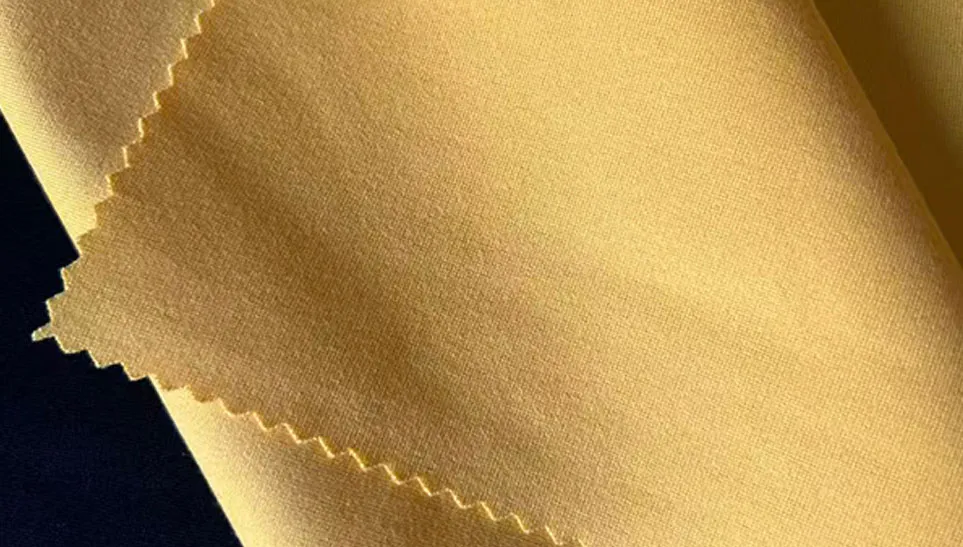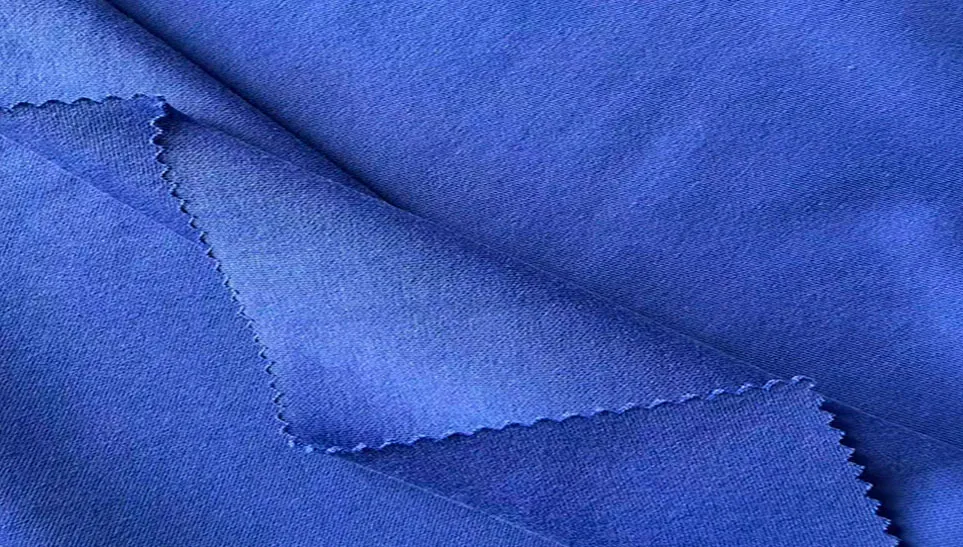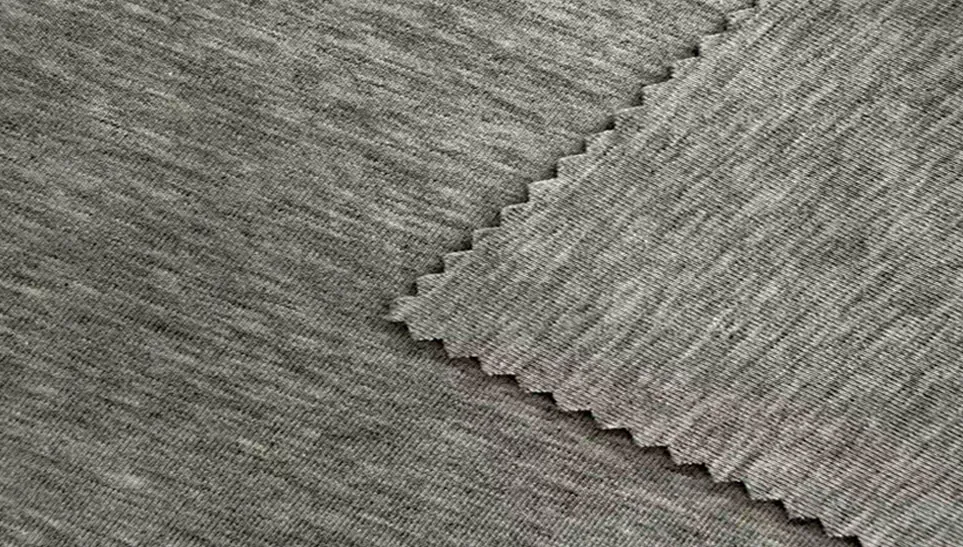
 93% Polyester 7% Spandex Air Layer Knit Fabric for School Sportswear
Source 93% polyester 7% spandex air layer knit fabric from Zhepeng for school tracksuits and jackets. Explore 3107# and discuss weight, hand feel, stretch recovery and custom development for bulk orders.
Air layer knit fabric is a layered knitted textile selected for a fuller handle and garment body, with performance determined by its construction and finishing.
Zhepeng’s 3107# combines 93% polyester and 7% spandex for buyers developing school tracksuits and jackets. It provides a reference for discussing thickness, stretch and appearance requirements.
For uniform manufacturers, brands and fabric purchasers, the priority is finding a material that supports movement while maintaining a presentable silhouette. Evaluate an actual swatch before confirming suitability for your collection.
Stretch recovery is a fabric’s ability to return toward its original dimensions after extension, helping buyers evaluate potential bagging during wear.
The spandex component supports stretch, but its percentage does not establish recovery performance or stretch direction. Request measurements under agreed conditions rather than assuming four-way stretch.
Consider thickness and GSM separately: GSM measures mass per unit area, while thickness describes physical depth. Fabrics with similar GSM can feel different.
Compare softness, compressibility and drape alongside recovery. For school jackets, assess collar shape and zipper presentation; for trousers, examine knee and seat bagging through garment trials.
Application matching aligns fabric properties with garment design, season and everyday wear conditions.
School tracksuits require comfortable movement and compatible performance between jacket and trouser fabrics. Lightweight outerwear needs sufficient body without excessive stiffness.
Prototype the complete garment to assess seam bulk, pocket shape, cuff compatibility and comfort over a polo shirt. If contrasting panels are planned, check their laundering behavior together.
Air layer construction alone does not establish waterproofing, wind resistance or quick-drying performance. Specify any required function separately and validate it before approval.
Wash stability is the ability of fabric to maintain agreed dimensions, color and appearance after specified laundering.
For schoolwear orders, define the care procedure, number of cycles and acceptance criteria before testing.
AATCC TM135addresses dimensional changes in fabrics after home laundering. AATCC TM61evaluates colorfastness using accelerated laundering conditions.
Also inspect pilling, seam distortion and changes in hand feel. Compare washed samples against retained approvals.
Where harmful-substance requirements apply, request current documentation for the selected article. OEKO-TEX STANDARD 100addresses harmful-substance testing; confirm certificate validity and product coverage for 3107#.
Integrated fabric production coordinates knitting, dyeing and quality control to support development and repeat-order requirements.
Established in 1993 in Chengdu, China, Zhepeng Textile has more than 30 years of knitted-fabric experience. Its manufacturing resources include 300 circular knitting machines, including 200 double-knit machines, plus in-house dyeing and laboratory facilities.
The company reports annual knitted-fabric output of 18,000 tonnes across its operations, rather than for 3107# alone.
For a quotation, send your reference swatch, target GSM, usable width, color standard, performance criteria and quantities per color. Discuss feasibility, sampling, minimum order quantities and delivery dates directly with Zhepeng.
Fabric sourcing questions clarify the specifications and approval steps needed before commercial production.
Zhepeng’s 3107# Air Layer Knit Fabric contains 93% polyester and 7% spandex. Confirm the specification sheet for your order.
It is an option for development. Assess movement, recovery, laundering performance and finished-garment comfort before approval.
No. Stretch direction and recovery depend on yarn placement, construction and finishing. Request relevant test results.
Ask Zhepeng to confirm current options. Select both through swatch comparisons rather than treating GSM as a thickness measurement.
Zhepeng supports development discussions based on samples and specifications. Confirm achievable colors, finishes and construction requirements during sampling.
Agree on specifications, approve the sample and color standard, complete relevant tests, and retain references for bulk inspection.
Successful air layer fabric sourcing combines garment-specific requirements with sample evaluation and measurable acceptance criteria.
Start with Zhepeng’s 3107# 93% Polyester 7% Spandex Air Layer Knit Fabric. Share your schoolwear brief or reference sample to discuss development options and request a tailored quotation.
 Call us on:
 Email Us:
 No. 111 Qingbaijiangdong Road, Zhihe Street, Pengzhou, Chengdu, Sichuan Province, China

 English